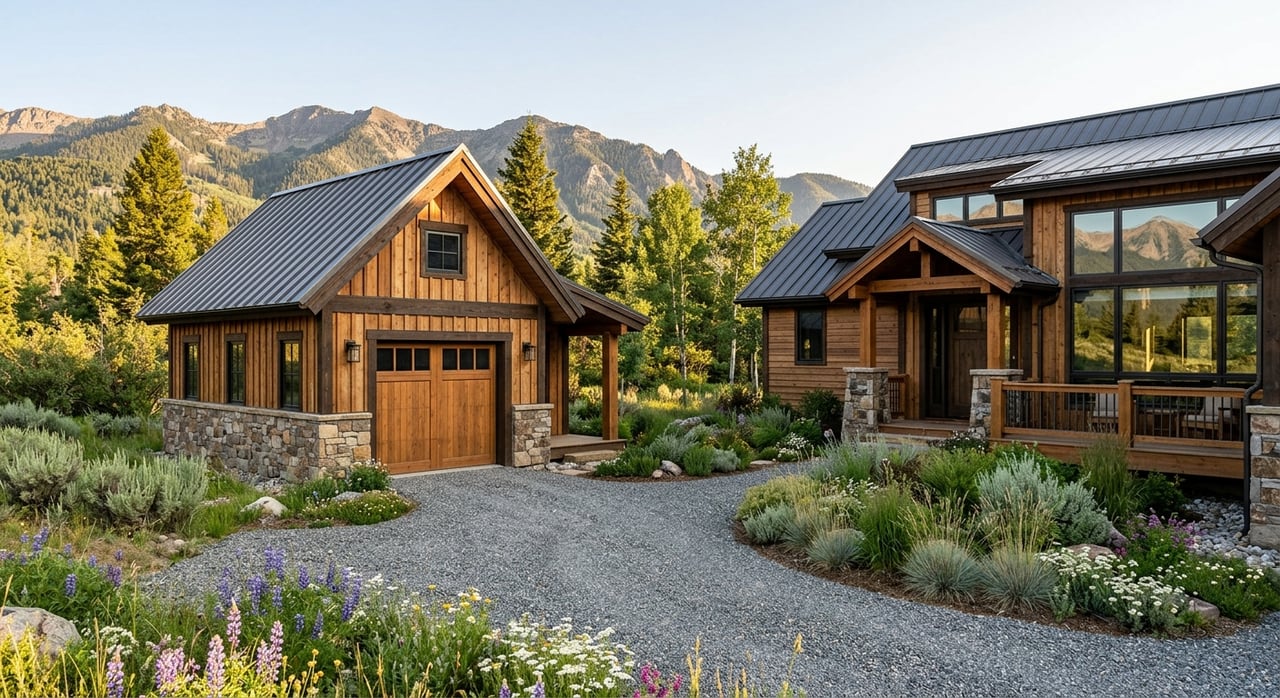
If you want elbow room, a place for tools or toys, and easier access to Bozeman, Belgrade, and Gallatin Gateway, Four Corners probably keeps showing up on your radar. That interest makes sense, but buying small acreage or a shop-friendly property here takes more than spotting a nice house on a big lot. You need to know how zoning, water, sewer, access, floodplain conditions, and covenants can shape what you can actually do with the property. Let’s dive in.
Why Four Corners draws acreage buyers
Four Corners sits in a part of Gallatin County that the county treats as a distinct zoning district with its own community plan. County planning also places it within the broader growth area between Four Corners, Belgrade, Bozeman, and Gallatin Gateway, so it is an area where future development is expected.
For buyers, that means you can find a mix of property types instead of one uniform pattern. Some parcels feel more rural and open, while others sit closer to mixed-use or neighborhood-scale development. That variety is part of the appeal, but it also means two properties a short drive apart can have very different rules.
Know the subdistrict before you fall in love
The first question to ask is simple: Which Four Corners subdistrict is the parcel in? The answer affects density, site layout, setbacks, and how practical your house-plus-shop plan may be.
The most relevant residential acreage districts for many buyers are RR/A and LDRR/A. RR/A allows residential uses plus accessory structures and accessory dwelling units, which can matter if you want a detached shop or other secondary building.
LDRR/A is different. It sits along the Gallatin River and is intended to preserve rural residential and agricultural use, open space, trails, and wildlife corridors, and it has a base density of one lot per 10 acres, with a possible bonus to one lot per 5 acres if 75% of the development is preserved as open space.
Other subdistricts in Four Corners can look very different from an acreage buyer’s expectations. For example, NC has no minimum lot size and a base density up to 1.75 units per acre, which shows just how much lot size and usable space can vary within the district.
What this means for your property search
A listing that says “acreage” does not automatically mean it will work for the way you want to live. You should confirm whether the parcel leaves enough room for the home footprint, shop placement, driveway, septic area if needed, and any watercourse or landscape-buffer constraints.
This is especially important if your vision includes a larger workshop, hobby building, or equipment storage. A property can be attractive on paper and still be a poor fit once zoning and site limitations are layered in.
Shop homes require more than garage space
In Four Corners, many buyers use the term “shop home” to mean a home with a substantial accessory building, workspace, or oversized detached shop. The key issue is not just whether a shop exists or could be built, but whether the intended use remains residential and fits the parcel’s rules.
Before you make an offer, confirm where accessory structures can go and whether outdoor lighting or outdoor-storage limits apply. If your plans involve fabrication, business traffic, or other non-residential activity, that is a different conversation than a typical residential workshop or storage building.
Setbacks may not work the way you expect
Several Four Corners subdistricts do not use minimum property-line setbacks in the usual way. Instead, landscape buffers help control placement, and for lots over two acres, applicants may request a building envelope to satisfy those landscape-buffer rules.
That can be helpful, but it also means site planning matters. A shop may be possible in theory, yet the practical build area could still be shaped by buffers, drainage, access, utilities, or natural features.
River, creek, and wetland issues can change everything
If you are buying near the Gallatin River or another watercourse, diligence becomes even more important. In LDRR/A, new structures generally require a 300-foot setback from the Gallatin River and a 150-foot setback from other watercourses, with limited exceptions for certain older situations.
Those rules can significantly shrink the usable building area on a parcel. A lot that looks generous from the road may have a much smaller envelope for a house and detached shop once watercourse setbacks are applied.
Wetlands can be another factor. Gallatin County notes that wetlands delineation may be required for some development applications, so a buyer planning new construction or major changes should not assume every open area is buildable.
Floodplain review matters in Four Corners
Floodplain diligence is especially relevant in the Gallatin River corridor, where many LDRR/A parcels are concentrated. Gallatin County uses FEMA floodplain maps that became effective on April 21, 2021, but the county also states that these maps do not capture every flood threat.
The county directs landowners to consider channel-migration studies as well. That matters because grading, fill, construction, and similar work within a regulatory floodplain can require permits, and flood-related site limits may affect both cost and design.
A practical buyer mindset
Do not stop at asking, “Is it in the floodplain?” Also ask how floodplain boundaries, channel migration, and nearby waterways could affect future improvements. That is especially important if you want to add a shop, expand an existing structure, or change driveway placement later.
Water and sewer can shape cost and timing
Four Corners Water & Sewer District operates public drinking water and wastewater systems in the area, but not every parcel is part of the district. The district says its service area reflects land that would be served if connected, yet much of the land is agricultural or in older subdivisions and not part of the district.
The district also says it is in its final expansion phase with limited remaining capacity. New hook-ups are listed at $18,000 per EDU, and out-of-district customers pay 1.5 times the in-district rate.
If the property has district service
If a parcel is served by the district, ask early about connection status, remaining capacity, and whether the property is in district or out of district. Those details can affect both your upfront costs and your long-term utility planning.
For buyers comparing multiple properties, utility availability can be one of the biggest differences between two homes that otherwise seem similar. A lower-priced property may not stay lower-priced once utility connection costs are factored in.
If the property needs well and septic
If the parcel is outside district sewer, Gallatin County Environmental Health says a local wastewater permit is always required before installing any non-public or public wastewater system. The site evaluation must be completed by a registered site evaluator or Montana professional engineer, and a registered installer must be on-site during installation.
The county also notes wastewater review timelines are currently around 40 days. That can matter if you are under contract on land or a property where septic due diligence is still in progress.
For private wells, the Gallatin Local Water Quality District notes that private wells are not monitored by public health authorities and recommends annual bacteria and nitrate testing. It also recommends additional testing in some parts of Gallatin County, including arsenic, uranium, and fluoride for residents west of the West Gallatin River.
Access and road questions to answer early
A great lot is not so great if access is uncertain or road responsibility is unclear. If a property needs a new driveway off a county-maintained road, Gallatin County requires a Road Access Permit.
If the parcel fronts a state highway, Montana Department of Transportation approach-permit rules and the System Impact Action Process may apply. That can affect timing, design, and feasibility, especially for vacant land or major redevelopment.
The county also says roads dedicated to public use are accepted for public use, but the county does not take maintenance responsibility. In practical terms, that means you should confirm who maintains the road, what agreement exists if any, and whether subdivision covenants add additional obligations.
Covenants can be just as important as zoning
County zoning is only part of the picture. Gallatin County specifically notes that sanitation and water-supply approvals, water rights, access or MDT approvals, and covenant compliance may still be required.
That means a property in the right zoning district can still come with private rules that affect lighting, road maintenance, or other use details. This is especially relevant because platted subdivisions with existing covenants addressing lighting standards may be exempt from some county lighting rules.
Lighting rules and acreage parcels
Outdoor lighting standards apply to new residential, commercial, and industrial construction in Four Corners. However, single-family residential uses on parcels two acres or greater are exempt, and some platted subdivisions with existing covenant-based lighting standards are also exempt.
For buyers, the takeaway is simple: do not assume the county rulebook is the only rulebook. Review subdivision documents and ask how those documents affect your intended shop, exterior lighting, and ongoing maintenance obligations.
A smart due diligence checklist
Before you write an offer on a small-acreage or shop-friendly property in Four Corners, try to answer these questions:
- Which zoning subdistrict applies to the parcel?
- Does that subdistrict leave enough usable area for the house, shop, driveway, and utility needs?
- Is the property in a platted subdivision with covenants that affect lighting, road maintenance, or accessory structures?
- Is the parcel served by Four Corners Water & Sewer District, and if so, what are the connection and capacity implications?
- If not on public sewer, what wastewater permits, site evaluations, and timelines apply?
- Are recent well tests available if the property uses a private well?
- Is the site near the Gallatin River, another watercourse, wetlands, or a mapped floodplain?
- Will access require a county Road Access Permit or an MDT permit?
- Does the intended shop use remain clearly residential?
This kind of checklist helps you compare properties on more than just price and square footage. It also reduces the chance of finding a major issue after you are already emotionally invested.
Why local guidance helps in Four Corners
Small-acreage and shop-home properties can be some of the most rewarding purchases in the Gallatin Valley, but they also ask more from a buyer. You are not just evaluating a house. You are evaluating a site, a rule set, infrastructure, future improvement potential, and the costs that come with all of it.
That is where local, hands-on guidance makes a difference. When you work through zoning, utility records, permit history, and access questions early, you can move forward with a much clearer picture of what you are actually buying.
If you are exploring small acreage or shop-friendly homes in Four Corners, Bozeman Realty can help you sort through the details, compare properties with a practical eye, and make a more confident move.
FAQs
What zoning matters most for buying small acreage in Four Corners?
- For many acreage buyers, RR/A and LDRR/A are the key residential districts to review because they can directly affect density, usable land area, and where a home or shop may fit.
What should you check before buying a shop home in Four Corners?
- You should confirm the zoning subdistrict, accessory-structure placement rules, covenant restrictions, utility service, access permits, and whether the intended shop use stays residential.
What water and sewer questions should buyers ask in Four Corners?
- Ask whether the property is served by Four Corners Water & Sewer District, whether connection fees or capacity limits apply, and if private systems are needed, request septic records and recent well-test information.
What river or floodplain issues affect Four Corners acreage properties?
- Parcels near the Gallatin River or other watercourses may face larger setbacks, wetlands review, floodplain permit requirements, and channel-migration concerns that can reduce usable building area.
What access permits might a Four Corners property need?
- A new driveway off a county-maintained road may require a Gallatin County Road Access Permit, and parcels on a state highway may need an MDT approach permit.
What role do subdivision covenants play for Four Corners properties?
- Covenants can add private rules on issues like lighting or road maintenance, so they should be reviewed alongside county zoning before you commit to a purchase.