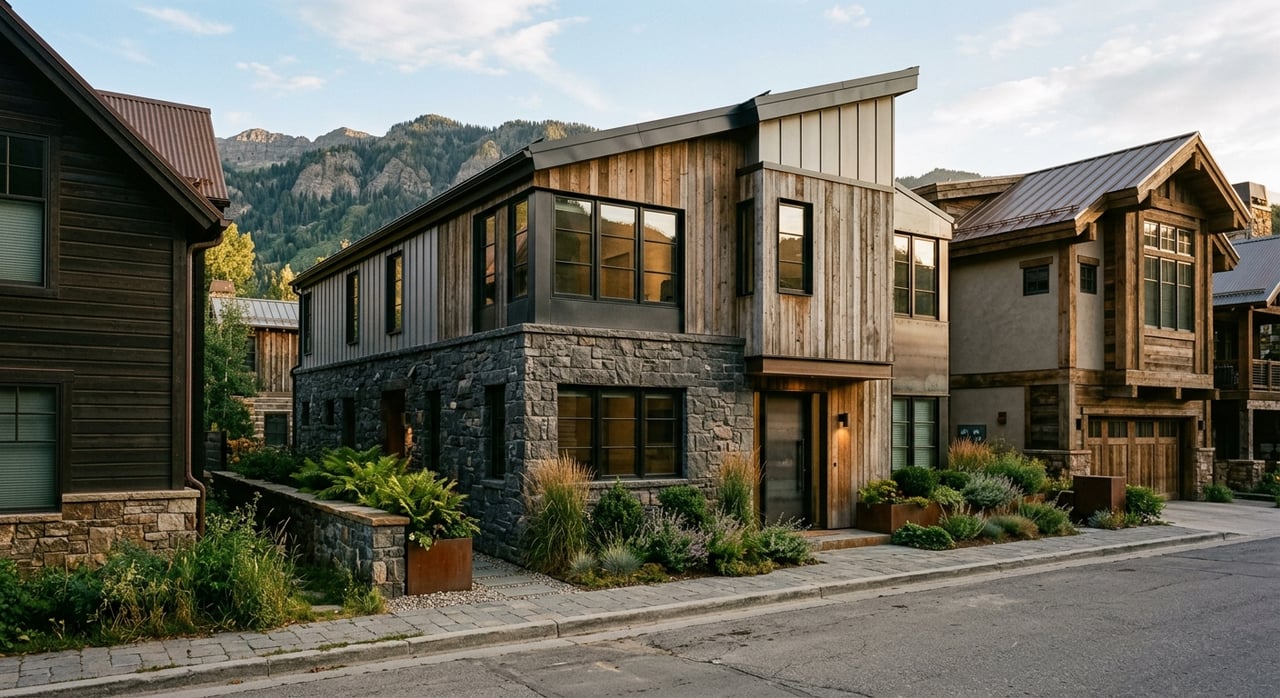
Wondering whether you should focus your home search in Four Corners or stay in town in Bozeman? It is a common choice in the Gallatin Valley, and the right answer usually comes down to how you want to live day to day, not just what shows up in a listing feed. If you are weighing space, price, commute, and housing options, this guide will help you compare the tradeoffs with a clearer lens. Let’s dive in.
Four Corners vs. in-town Bozeman
At a high level, the choice is fairly simple: Bozeman usually trades space for convenience, while Four Corners often trades convenience for land and flexibility.
That does not mean one area is better than the other. It means each serves a different set of priorities. If you want more housing variety and easier access to in-town destinations, Bozeman often stands out. If you want more elbow room and are comfortable planning around driving, Four Corners may feel like a better fit.
Price differences in today’s market
Current listings show a noticeable gap between the two areas. As of May 2026, Bozeman had 840 active for-sale listings with a median listing price of $865,000, while Four Corners had 84 active listings with a median listing price of $1.175 million.
At first glance, that makes Four Corners look much more expensive. But the price-per-square-foot gap is smaller than the headline prices suggest. Bozeman’s median list price per square foot was $408, compared with $446 in Four Corners, which suggests the premium in Four Corners is tied more to lot size and inventory mix than to a dramatically different house value on a per-foot basis.
There is another useful layer here. Census estimates for owner-occupied home values are closer together: $687,900 in Bozeman and $648,400 in Four Corners. That suggests today’s active listings reflect current inventory composition more than a permanent long-term pricing divide.
Inventory and housing choices
If you want options, Bozeman clearly offers more depth. Along with 840 active for-sale listings, Bozeman also had 714 rental listings in the current market snapshot, compared with just 6 rental listings in Four Corners.
That larger inventory matters for buyers in a few ways. You usually have more price points, more home styles, and a broader future resale pool. It can also make it easier to compare neighborhoods and property types without leaving the city market.
Bozeman offers more housing variety
Bozeman’s housing framework includes apartments, townhomes, condominiums, accessory dwelling units, mobile homes, and single-family homes. That mix helps explain why in-town Bozeman often works well if you want proximity, flexibility, and a wider range of entry points.
City planning documents also show a more compact development pattern. Bozeman models detached-home patterns with average net lot sizes around 7,100 square feet in one scenario and about 4,300 square feet in a more compact one. In practical terms, many in-town buyers should expect smaller lots and a denser neighborhood pattern than what is typical in Four Corners.
Four Corners leans more toward land
Four Corners inventory tends to include more acreage-oriented properties. Current examples include lots around 1.39 acres, 2 acres, and 3.71 acres, which reflects a more land-focused market profile.
The county zoning framework supports that pattern. In the Low Density Rural Residential/Agricultural subdistrict, the base density is one lot per 10 acres, with a bonus up to one lot per 5 acres if enough open space is preserved. For you as a buyer, that often translates to a lower-density setting and a different feel than many in-town Bozeman neighborhoods.
Lot size and lifestyle tradeoffs
One of the biggest real-world differences is how much land you want around you. In Bozeman, available lots can vary, but many homes fit a more compact in-town pattern. Current examples include a 0.25-acre lot and a 6,299-square-foot lot, though there are also larger edge-of-town properties in the market.
In Four Corners, larger parcels are more common in the active inventory. If your wish list includes room for outbuildings, more separation from neighbors, or a broader site layout, Four Corners may give you more opportunities to find that setup.
That said, land comes with tradeoffs. A larger parcel can mean more maintenance, more snow management, and more of your budget tied to site size instead of pure interior square footage. It helps to decide early whether your priority is the home itself, the land around it, or a balance of both.
Commute and daily convenience
For many buyers, the commute question ends up being the deciding factor. Gallatin County identifies the Huffine Lane corridor from Four Corners to Bozeman as a Primary Commuter Pathway. The area is highly auto-oriented, with about 79% of workers driving to work, an average commute distance of 12.5 miles, and a mean commute time of 16.7 minutes.
Bozeman’s mean travel time to work is similar at 15.5 minutes, so the difference is not just about total time in the car. The bigger difference is how you get around and how many choices you have in your daily routine.
In-town Bozeman supports more mode choice
Bozeman offers a denser network of destinations and transit routes. Streamline runs four in-town routes, plus weekday commuter service to Belgrade and Livingston. Its Purpleline and Goldline connect downtown Bozeman, the Gallatin Valley Mall, Montana State University, and west Bozeman neighborhoods.
If you want the possibility of a more car-light routine, in-town Bozeman usually gives you a better shot at that. Even if you still drive often, having more nearby destinations and route choices can make daily life feel simpler.
Four Corners is more driving-oriented
In Four Corners, most buyers should plan around regular driving and the Huffine and US-191 corridor. That does not make it inconvenient for everyone, but it does shape the rhythm of daily life.
If you are comfortable with that tradeoff, the extra land and lower-density setting may be well worth it. If quick in-town access is a top priority, Bozeman may be the easier fit.
Who each area tends to suit
Four Corners and Bozeman also differ in who the housing stock tends to serve. Four Corners has a higher owner-occupied housing unit rate at 77.5%, compared with 44.7% in Bozeman.
Bozeman, by contrast, has a more mixed housing profile and a stronger rental presence. Median gross rent is $1,717 in Bozeman versus $1,338 in Four Corners, which supports the picture of Bozeman as a more rental-heavy and varied city market.
Four Corners may fit you if you want:
- More land or a larger parcel
- A lower-density setting
- A home search focused on owner-occupied patterns
- Flexibility in property type tied to a more rural edge
- Room to prioritize site layout along with the house itself
In-town Bozeman may fit you if you want:
- More for-sale inventory and more housing variety
- A wider spread of price points within one city market
- Easier access to in-town destinations
- More transportation choices beyond driving alone
- A stronger fit for compact living or lower-maintenance ownership
Bozeman price points vary more than many buyers expect
It is also important not to think of Bozeman as one single price tier. Realtor.com neighborhood data shows median prices ranging from $437,000 in Bozeman Ponds to $1.3725 million in North East.
That range matters because some buyers assume they must leave town to find a workable price point. In reality, Bozeman includes a broad spread of neighborhoods and housing types. If convenience matters most, it is often worth exploring the full in-town market before ruling it out.
How to choose with confidence
If you are deciding between Four Corners and in-town Bozeman, focus on your lifestyle first and the map second. A home that looks perfect on paper can feel less ideal if the daily routine does not match how you actually live.
A simple way to compare the two areas is to ask yourself these questions:
- Do you want more land, or more access?
- Are you comfortable depending on a car for most trips?
- Would a broader mix of home types help your search?
- Is future resale tied more to lot size, or to in-town convenience?
- Do you want a lower-density setting, or a location closer to city services and destinations?
When you answer those questions honestly, the right direction usually becomes clearer. The market data supports both choices. The best fit depends on which tradeoffs feel easiest for you to live with over time.
If you want help comparing active listings, lot sizes, and neighborhood patterns across the Gallatin Valley, Bozeman Realty can help you search smarter and make a more confident move.
FAQs
What is the main difference between Four Corners and in-town Bozeman homes?
- The main difference is usually lifestyle fit. Four Corners tends to offer more land and a lower-density setting, while in-town Bozeman tends to offer more housing variety, more inventory, and easier access to city destinations.
Are Four Corners homes more expensive than Bozeman homes?
- Current listings show a higher median listing price in Four Corners at $1.175 million versus $865,000 in Bozeman as of May 2026, but the per-square-foot gap is smaller, which suggests lot size and inventory mix play a major role.
Is Four Corners better for buyers who want acreage?
- Four Corners is often a better fit if acreage is a top priority because active listings include larger parcels and the area reflects a more land-oriented, lower-density pattern.
Is in-town Bozeman better for buyers who want more options?
- Bozeman generally offers more options because it has much deeper for-sale and rental inventory, plus a wider mix of home types such as condos, townhomes, and single-family homes.
How different are commutes from Four Corners and Bozeman?
- Mean commute times are fairly close in the available data, but Four Corners is more auto-oriented, while Bozeman offers more route and transit choices for daily travel.
Should you choose Four Corners or Bozeman for resale flexibility?
- It depends on what future buyers value most. Bozeman’s deeper inventory and broader buyer pool can support resale flexibility, while Four Corners may appeal more strongly to buyers who specifically want land and a lower-density setting.